Loading...
FREE SHIPPING | 3-YEAR WARRANTY ON ALL MACHINES
Loading...
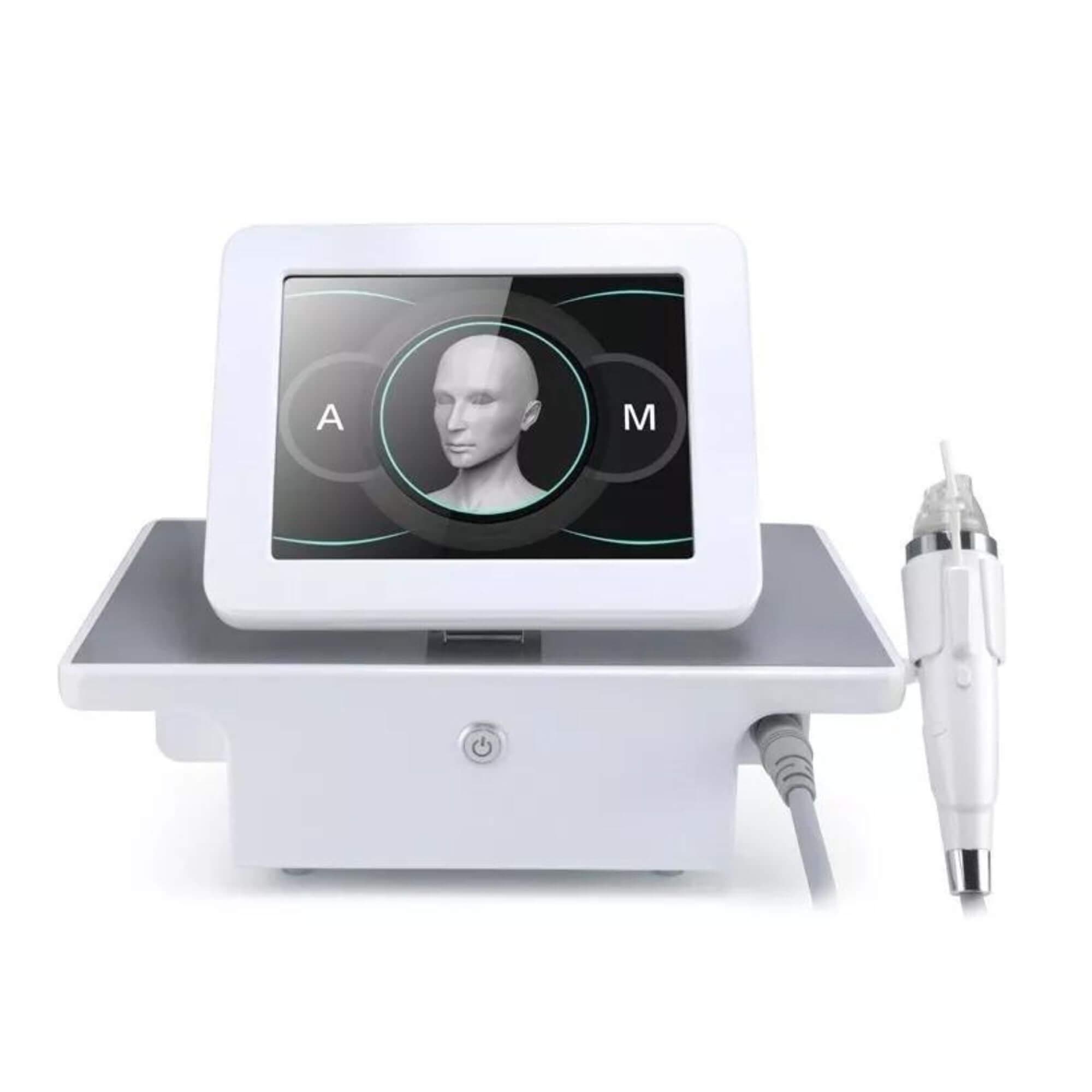
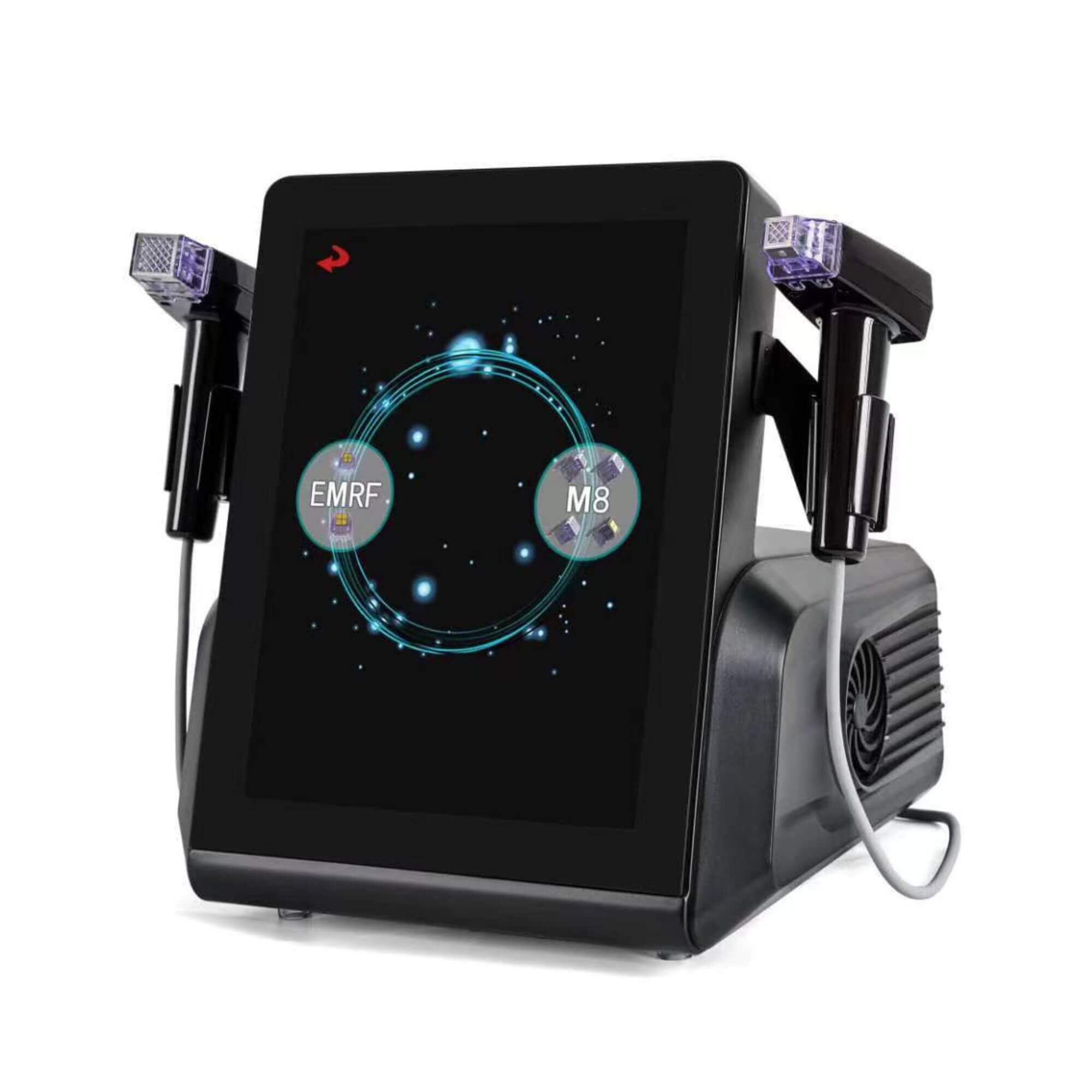
RF microneedling combines two proven mechanisms: ultra-fine needles create controlled micro-channels, and radiofrequency energy is delivered from the needle tips directly into the dermis. The result is targeted dermal heating with minimal surface damage—ideal for scars, pores, texture and tightening, on a wider range of skin tones than laser resurfacing.
The Science
Standard microneedling injures the skin mechanically to trigger repair. RF microneedling adds a second, more powerful stimulus: radiofrequency energy emitted from the needle tips once they reach the target depth in the dermis.
Each insertion creates a column of controlled thermal injury deep in the dermis while the epidermis—pierced by only a tiny needle channel—is largely spared. This fractional, depth-controlled heating is the key advantage: it remodels deep tissue with far less surface disruption than ablative laser, which dramatically lowers the risk of post-inflammatory hyperpigmentation in darker skin.
The thermal injury zones drive neocollagenesis and dermal contraction. Over weeks, the matrix rebuilds denser and tighter—softening scars, refining pores, smoothing texture and firming lax skin. Insulated needles confine the heat to the dermis and protect the epidermis even further.
By delivering heat below the surface through needle tips, RF microneedling remodels the dermis while sparing the epidermis—making aggressive deep treatment possible on skin tones where laser resurfacing would be risky.
The Process
Topical anesthetic is applied for 30–45 minutes for comfort.
Needle depth and RF level are set per zone—deeper for scars, shallower near eyes.
The handpiece stamps controlled insertions across the area, often in 1–2 passes.
A calming serum or mask is applied; mild pinpoint bleeding is normal.
Redness and a sandpaper texture settle over 1–3 days.
Indications
Remodels boxcar and rolling scars by rebuilding dermal volume.
Tightens and refines pore appearance and oily texture.
Smooths crepey skin and early wrinkles.
Firms jawline, neck and abdomen via dermal contraction.
Improves the texture and color of striae.
Why RF Microneedling
Deep remodeling with minimal epidermal damage.
Much lower PIH risk than ablative laser resurfacing.
Depth and energy tuned per zone and concern.
Most clients recover in 1–3 days.
Clinical Evidence
Journal of the American Academy of Dermatology · 2015
Significant scar improvement with a strong safety profile across skin types.
Dermatologic Surgery · 2017
Low rates of dyspigmentation, supporting use on darker phototypes.
Skin Safety
| I | II | III | IV | V | VI | |
|---|---|---|---|---|---|---|
| Insulated Needles | Safe | Safe | Safe | Safe | Safe | Caution |
| Non-Insulated Needles | Safe | Safe | Safe | Caution | Caution | Not recommended |
Because RF heats via needle tips rather than light, RF microneedling is far safer on darker skin than ablative laser. Insulated needles further protect the epidermis; on types V–VI use insulated tips and conservative energy.
Safety
Single-use sterile needle cartridges are mandatory—never reuse. Avoid active acne pustules (risk of spreading bacteria) and treat only intact skin. Set depth carefully near thin-skinned areas. Bleeding should be pinpoint; significant bleeding means depth is too aggressive.
✕ Not recommended during pregnancy
For Operators
| Area | Energy | Pulse | Spot | Freq | Cooling | Passes |
|---|---|---|---|---|---|---|
| Forehead | Level 3–5 | 100–200ms | Stamp | — | None | 1–2 |
| Cheeks | Level 4–6 | 150–300ms | Stamp | — | None | 1–2 |
| Scars | Level 6–8 | 200–400ms | Stamp | — | None | 2 |
| Neck | Level 2–4 | 100–150ms | Stamp | — | None | 1 |
For scars and texture, the field comes down to a few options. Here is the comparison.
Mechanical injury only.
✓ Pros
Cheaper, minimal downtime.
✕ Cons
No deep RF heat—weaker on scars and laxity.
Vaporizes the surface fractionally.
✓ Pros
Powerful resurfacing of severe damage.
✕ Cons
Significant downtime; high PIH risk on dark skin.
Focused ultrasound to the SMAS.
✓ Pros
Best for deep lifting.
✕ Cons
Does not treat surface texture, pores or scars.
RF microneedling is the texture-and-scar specialist; pair it with HIFU for lift or IPL for tone for a complete rejuvenation menu.
Equipment
Operator Training
Training covers depth and energy selection by zone and skin type, sterile cartridge handling, scar protocols, and post-inflammatory pigmentation prevention—critical for safe practice on diverse skin.
FAQ
Typically 3–4 sessions spaced 4–6 weeks apart, with continued improvement for months afterward as collagen rebuilds.
“For our skin-of-color clients with acne scarring, RF microneedling is the safest powerful option we have. Results are excellent and PIH is rare.”
— Dr. Priya S., Dermatology Clinic, Dubai
Request specifications, pricing and a tailored recommendation from our equipment specialists.
RF microneedling machines combine fine microneedles with radiofrequency energy to remodel the deep dermis while sparing the epidermis—treating acne scars, enlarged pores, fine lines, stretch marks and mild laxity. Safer on darker Fitzpatrick skin types than ablative laser resurfacing, professional RF microneedling devices deliver powerful, adjustable results with short downtime. Lazzybeauty supplies CE/FDA-cleared RF microneedling equipment with single-use sterile cartridges, practitioner training and technical support.