Loading...
FREE SHIPPING | 3-YEAR WARRANTY ON ALL MACHINES
Loading...
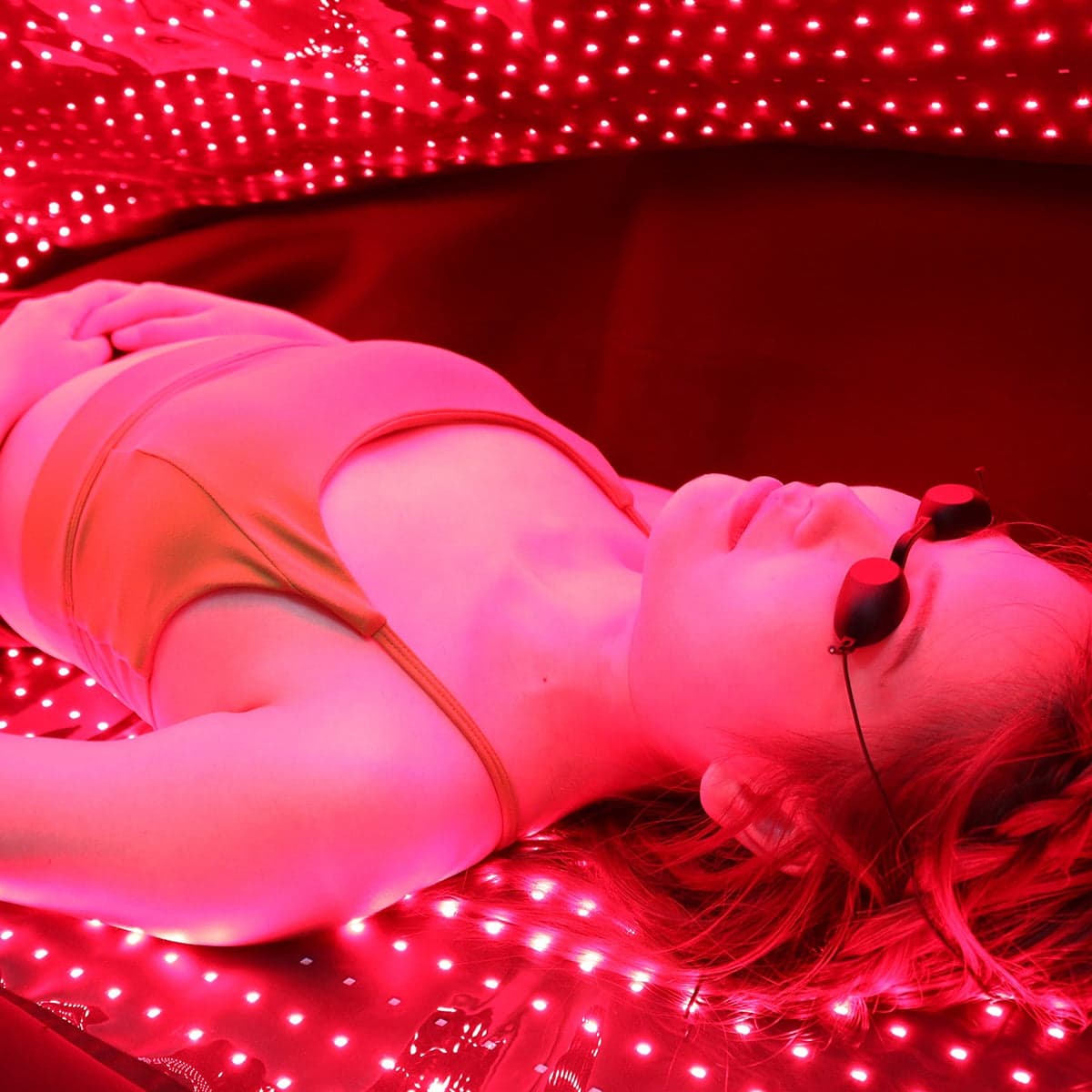
Photodynamic therapy (PDT) combines a light-sensitizing agent with a specific light wavelength. A photosensitizer (commonly ALA) is applied and absorbed preferentially by overactive or abnormal cells; activating light then triggers a burst of reactive oxygen that destroys them. It is a medical-grade treatment for sun-damage pre-cancers, stubborn acne and deep photo-rejuvenation.
The Science
PDT is a two-step reaction. First, a topical photosensitizer (typically 5-aminolevulinic acid, ALA) is applied and left to incubate; it is taken up preferentially by rapidly dividing or abnormal cells—sun-damaged keratinocytes, pre-cancerous cells, and the oil glands and bacteria that drive acne.
Next, the area is exposed to an activating wavelength—usually red for deeper targets like sebaceous glands and pre-cancers, or blue for more superficial work. The light energizes the photosensitizer, producing a localized burst of reactive oxygen species that selectively destroys the targeted cells while largely sparing healthy tissue. The result is clearance of actinic (sun-damage) lesions, a strong and lasting effect on resistant acne, and overall photo-rejuvenation—at the cost of several days of redness and peeling and strict post-treatment photoprotection.
PDT turns selectivity into power: the photosensitizer concentrates in the cells you want to treat, so the activating light destroys them precisely—making it a medical-grade option for pre-cancers and resistant acne.
The Process
Skin is cleansed/prepped and the photosensitizer applied.
The agent absorbs into target cells over a set incubation time.
Red or blue light activates the photosensitizer for the chosen duration.
The client must avoid all light/sun for ~48 hours; redness and peeling follow.
Indications
Clears pre-cancerous sun-damage lesions (medical).
Targets oil glands and bacteria for lasting control.
Improves tone, texture and sun damage.
Reduces sebaceous activity in oily, acne-prone skin.
Why PDT
Concentrates action in abnormal/overactive cells.
A recognized therapy for actinic keratosis.
Strong, durable effect on resistant acne.
Improves overall photodamage at the same time.
Clinical Evidence
Journal of the American Academy of Dermatology · 2010
High clearance rates of actinic keratoses with ALA photodynamic therapy.
British Journal of Dermatology · 2012
Significant, durable acne improvement following PDT courses.
Skin Safety
| I | II | III | IV | V | VI | |
|---|---|---|---|---|---|---|
| ALA + Red Light | Safe | Safe | Safe | Caution | Caution | Caution |
| ALA + Blue Light | Safe | Safe | Safe | Caution | Caution | Caution |
PDT can be used across skin types but darker skin carries a higher risk of post-inflammatory hyperpigmentation; use conservative parameters and rigorous photoprotection on Fitzpatrick IV–VI. This is a medical procedure—physician oversight is recommended.
Safety
PDT is a medical treatment and in most jurisdictions requires physician involvement. The treated skin is acutely photosensitive for ~48 hours—strict avoidance of sun and bright light is mandatory to prevent severe reactions. Expect redness, swelling and peeling. Screen carefully and never treat photosensitive disorders.
✕ Not recommended during pregnancy
For Operators
| Area | Energy | Pulse | Spot | Freq | Cooling | Passes |
|---|---|---|---|---|---|---|
| Sun Damage | Per protocol | Incubate + light | Full area | Red light | None | 1 |
| Acne | Per protocol | Incubate + light | Full face | Red/Blue | None | 1–3 |
PDT is the high-power escalation of light therapy.
Light alone, no photosensitizer.
✓ Pros
Gentle, no downtime, drug-free.
✕ Cons
Far less powerful than PDT.
Systemic acne medication.
✓ Pros
Very effective for severe acne.
✕ Cons
Systemic side effects; PDT is a topical/light alternative.
Plain LED is the gentle, no-downtime option; PDT adds a photosensitizer for a medical-grade result on pre-cancers and resistant acne—with real downtime and oversight.
Equipment
Operator Training
Advanced, medically-oriented training covering photosensitizer handling and incubation, light dosimetry, indication selection, the critical post-treatment photoprotection window, and complication management. Physician oversight is recommended.
FAQ
After PDT the skin is intensely photosensitive. Any sun or bright light during this window can trigger a severe, painful reaction—so strict avoidance is mandatory.
“For sun-damaged patients and resistant acne, PDT delivers results LED alone cannot. We manage it medically with strict aftercare, and outcomes are excellent.”
— Dr. Marcus B., Dermatology Clinic, Frankfurt
Request specifications, pricing and a tailored recommendation from our equipment specialists.
Photodynamic therapy (PDT) machines pair a topical photosensitizer (such as ALA) with red or blue activating light to selectively destroy sun-damage pre-cancers (actinic keratosis), resistant acne and photodamaged cells while sparing healthy tissue. A medical-grade treatment requiring strict post-treatment photoprotection and physician oversight, professional PDT light equipment from Lazzybeauty is CE/FDA-cleared and supplied with practitioner training and technical support.